Specialised in teaching piano, music theory and singing beginners and ABRSM graded exams. Provided by a qualified and DBS checked music teacher.
Qualifications: Master degree in Music Teaching; Music Teaching Diploma Level 6 Licentiate, Passed with Merit; Grade 8 Piano, Grade 8 Singing and Grade 8 Music Theory from ABRSM ( The Associated Board of the Royal Schools of Music)
If you are interested in playing along with me online, please find the link below. The Secondo http://youtu.be/WF1u_l2UYD8. The Primo is on page 45, Part 2 John Thompson's Easiest Piano Course. Enjoy it!
Use these videos to practice counting and clapping some basic rhythmic exercises
at various speeds. Move on if you can manage.
1. Preparation stage. 3 exercises that include crotchets, quavers and minims at
60 BPM.
2. Stage 1. Four basic exercises that include crotchets and quavers at 60 BPM.
3. Stage 2. Three exercises that include semibreve, crotchets, minims, dotted
minims and rests in triple and quadruple time at 60 BPM.
4. Stage 3. Two exercises that include semibreve, crotchets, minims, dotted
minims and rests in triple and quadruple time at 96 BPM. Change playback speed
by clicking the setting at the top right hand corner, go slower or faster as you wish.
5. A song in triple meter, dance with me! or play body percussion
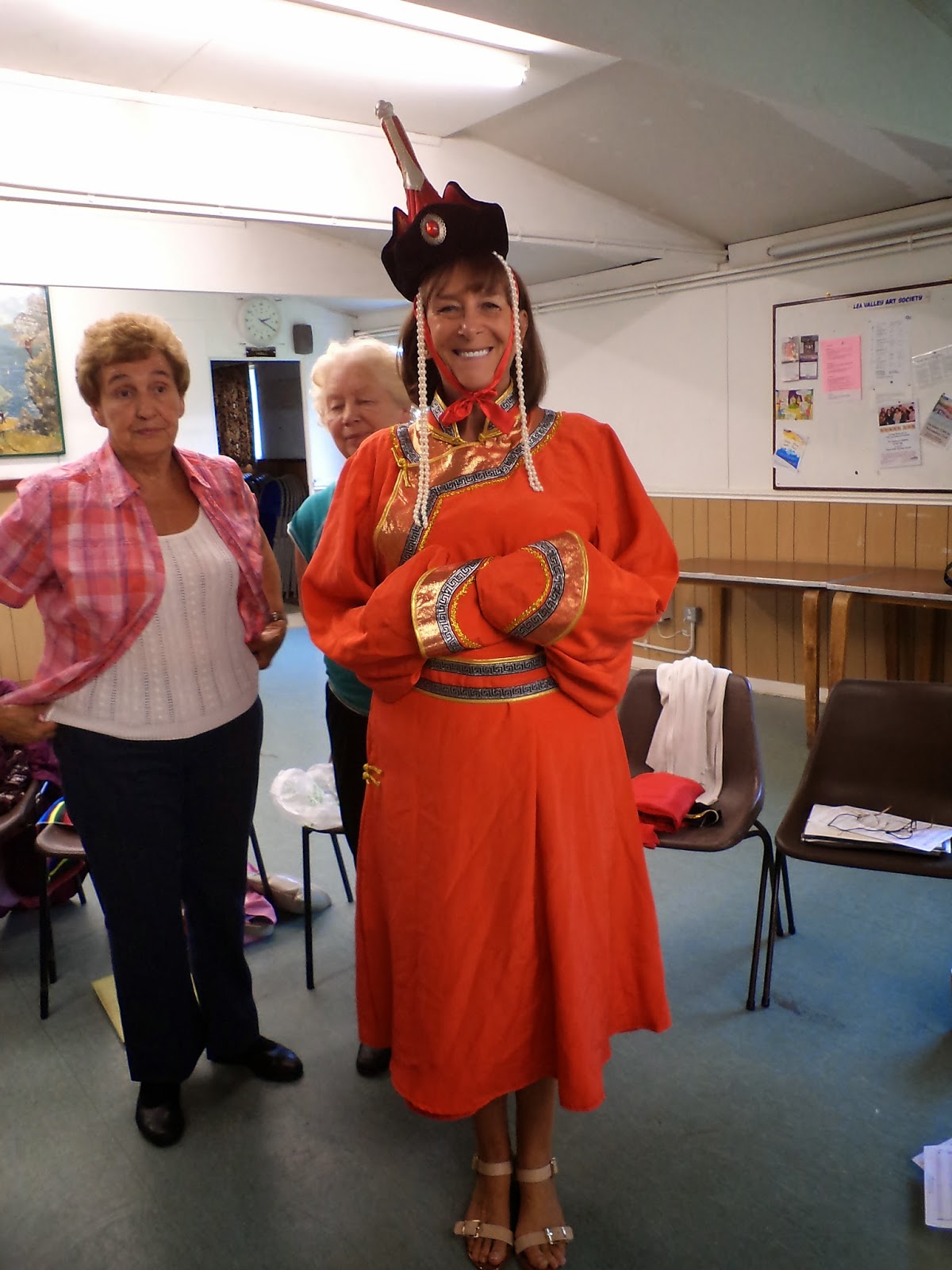
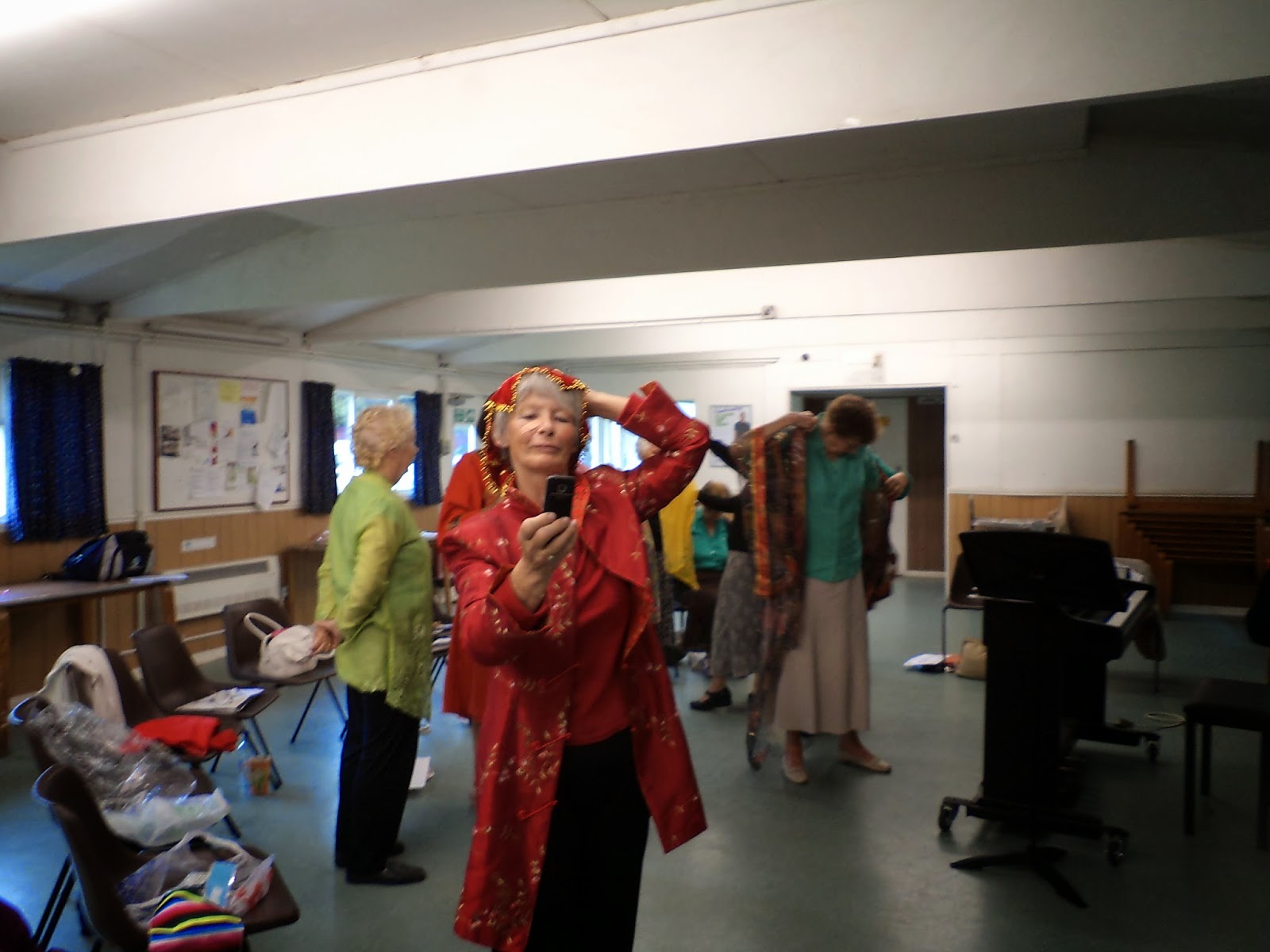
Thanks to everyone for putting a nice party together. Lovely cakes, beautiful oriental costumes from the different ethnic groups. Additional to a Chinese Mongolian love song, we even learned a Malaysian folk song called BURUNG KAKATUA. The lyrics are funny. Old sister bird, perched on the window sill. Grandma is now quite old of her teeth, only two remain. A special thank to Lee for teaching us and telling us a bit history about Malaysia.
The Himalayas is a mountain range in Asia separating the Plains of the Indian Subcontinent from the Tibetan Plateau. It’s a home to the planet’s highest peaks, including the highest Mount Everest. Many Himalayan Peaks are sacred in both Buddhism and Hinduism.
The Himalayas 合唱《喜马拉雅山》
The lyrics are very simple, keep repeating The Himalayas in Chinese Mandarin.
There're 3 verses in total.
The 1st verse: in unison.
The 2nd verse: in round, 1 beat behind.
The 3rd verse: adding the chant: 4/4 亚索,亚索,亚拉索 (in Tibetan)
4/4 ♫ ♫ ♫ ♪ ן
Ya Suo,Ya Suo, Ya La Suo. In English, it means Good, Great, Come on! Image you are travelling in this snowy area just like those people in the picture. No matter you are challenging the peaks or on the way to worship.
The ending: (in Tibetan) 扎西德勒 Zha Xi De Le. In English, it means Blessings, Best Wishes.
This short song was written mainly for those non Chinese who are interested in learning Chinese or Chinese colorful cultures. You can also add an alto line by humming the bass notes and improvise along the melody line.
Music, words, piano arrangement, piano accompaniment, vocal, video edited by Y Jones.
The piano accompaniment 合唱《喜马拉雅山》钢琴伴奏
The preview of the next lesson, a Han race folk song/dance
Jasmine Blossoms 汉族江苏民歌《茉莉花》
The preview of the next lesson, a Mongolian folk song
Dating at Ao Bao 蒙古民歌《敖包相会》
Yan won a singing silver in the UK China Talent Show 2014 London
A Tibetan folk style song called The Tibetan Plateau 参赛曲目《青藏高原》
This
was the provocative title of the famous BBC Two series in which five Chinese
teachers imposed their teaching methods on 50 unsuspecting Year 9 students in
Hampshire. This month-long experiment culminated in these pupils outperforming
the remainder of the school in exams. Since it was on BBC, there have been
ongoing discussions encouraging us to reflect on the differences between the
British and Chinese education systems.
If we
adopt a strict ‘results orientated’ approach, it can be argued that the Chinese
education system is significantly outperforming its British counterpart.[2]
But education is much more nuanced than this and many Chinese parents actually prefer
enrolling their children to the UK for education, partly for the perceived
benefits (greater creativity, leadership, team spirit, etc) and partly to avoid
the brutal Chinese system. Pre-covid,
the statistics indicate a sustained growth (34% in the last five years)[3] of
Chinese pupils entering the British education system, despite the eye-watering
costs involved.
Firstly,
I really surprised the BBC and the Bohunt school in Hampshire were brave enough
to conduct this experiment. According to Mr. Neil Strowger, the Headteacher and
what we see in the film, there were numerous conflicts and disagreements. For
example, the Chinese teachers complained about the students’ poor attitude to study
and their bad discipline. The English students could not cope with the 12-hour days
only with 2 meal breaks and studying in a large group of 50 students.
The
Headteacher’s report referred to the “very narrow curriculum, endless note
taking, repetition, not many opportunities to express personal opinions, listen
quietly, follow the instructions”.[4]
Some teachers characterised this as a throwback to Britain in the 1950s, with too
much theory and limited creativity and practice. Perhaps in time the students
and the teachers became more familiar with one another and gradually the
students’ behaviour improved, miracles happened, with some students even
expressing a preference for the Chinese style. Some of students even cried and did
not want to say goodbye to their Chinese teachers at the concluding ceremony
when their exam results were announced. On average, the ‘Chinese school’ was about
10 marks better in all three subjects than the ‘English School’. One girl said
“it was one of the most interesting months in my life” although she had earlier
complained of feeling like a robot and hated the sense of competition.[5]
I’d
like to share my opinions after having been studying and working in both
countries. First, the positive side, Chinese school emphasises the importance
of discipline, respect teachers and hard work. Also, long hours are quite
normal. My eldest son was in an ordinary state primary school in Shanghai and
at 7 years old would study from 8am until about 5pm, with about an hour’s
homework too. When we returned to the UK, surprisingly, he was top of his class.
The process of repetition may seem dull and uninspiring, but it is an effective
means of learning. When we practice piano or any skill, this inevitably results
is a significant amount of repetition. One point to note is that these determined
Chinese teachers were from elite schools and were very successful. Whether the
experiment would have worked if ordinary level Chinese teachers attempted it, this
is an interesting debating point. A second point is that the British education
system places greater emphasis on individuality, diversity, equality, etc.[6]
I
agree with the Headteacher’s comments when he stated that “The Chinese parents,
culture and values all are different”. There is great deal of cultural
diversity in British schools, something that will be explored in my next
assignment.
As a
supplemental point, we should also note that in making this crude comparison
between the different education systems, at no point are Special Educational
Needs considered. The UK statistics (2019) indicate that the numbers of pupils
with SEN has increased for a third consecutive year, representing 14.9% of the
total pupil population.[7]
As we all appreciate, not every learner is suitable to copy “stuff” from the
board, as there are different type of learners (V. A. R. K).[8]
As a
teacher, I try to combine the most appropriate elements of the Chinese and British
methods. I also encourage students to take some important notes, use PPT,
handout, written assignments, as well as audio and visual resources. When I
teach the improvisation, for example, some ‘boring’ bits like theory, scales
and arpeggios (foundation) must be practised numerous times until they can be
recalled without hesitation. The improvisation concept and ideas are introduced
with clear oral, written instructions and demonstration, and then let the
students discuss, try and share their ideas, turn the theory into their
creative practice part. Ideally in a mixed ability group, the capable one
always contributes more, helps build a team ethos so that no one gets left
behind. Between students, competition can be fun and drive success. Normally, I
would suggest that why not try some higher or lower notes, two or three notes
together, grace notes, or perhaps try different rhythmic patterns.
When
I teach students who have an Asian background (diversity), I generally demand slightly
higher standards, set more homework and am stricter just as their parents have
requested. Of course, it is essential to make sure everyone understands the
correct approach to learning and practice so that they are an effective leaner,
no matter what their background (equality). I also regularly check how the
student is coping (individuality), since even in Asian families a ‘Tiger mum’
may not have ‘Tiger children’. I am always curious about why it is my Asian or
Chinese students who generally receive distinctions in their graded music exams.
Of course, I cannot rule out the possibility that sub-consciously I expect this
outcome and therefore it becomes a self-fulling prophesy but I do not believe
this to be the case. I will explore this issue more in my next assignment.
Finally
to end with two old Chinese sayings, firstly “not perfect, but better”. There
is no perfect educational system in the world, but if we analyse them, “Learn
from others’ strong points to offset one’s weaknesses”, we will all be better.
With the role of music in the promotion of cultural understanding and multi-ethnic
integration, both the British and Chinese educational authorities introduce the
colourful world music to new generations.
References: Are
Our Kids Tough Enough Chinese School | Season 1 Episode 3,
2015. https://www.youtube.com/watch?v=DYGxAwRUpaI. ‘Equality, Diversity and Inclusion | British
Council’. Accessed 18 August 2020.
https://www.britishcouncil.org/about-us/our-values/equality-diversity-inclusion. Harris, Paul. ‘Preferred Learning Styles’. In Improve
Your Teaching!: An Essential Handbook for Instrumental and Singing Teachers,
2006th ed., 64. Faber Music, n.d. ‘SEN_2019_Text.Docx.Pdf’. Accessed 25 August
2020.
https://assets.publishing.service.gov.uk/government/uploads/system/uploads/attachment_data/file/814244/SEN_2019_Text.docx.pdf. ‘UK Schools Stuck at Back of the Class | The
Sunday Times’. Accessed 25 August 2020.
https://www.thetimes.co.uk/article/uk-schools-stuck-at-back-of-the-class-5l8s5hvgphd. ‘Universities See Boom in Chinese Students’.
Accessed 25 August 2020.
https://www.universityworldnews.com/post.php?story=20200124135907396. ‘Would Chinese-Style Education Work on British
Kids?’ BBC News, 4 August 2015, sec. Magazine.
https://www.bbc.com/news/magazine-33735517. ‘Would Chinese-Style Education Work on British
Kids?’ BBC News, 4 August 2015, sec. Magazine.
https://www.bbc.com/news/magazine-33735517.
[1]Are Our Kids
Tough Enough Chinese School | Season 1 Episode 3.
[2]‘UK Schools
Stuck at Back of the Class | The Sunday Times’. [3]‘Universities
See Boom in Chinese Students’. [4]‘Would
Chinese-Style Education Work on British Kids?’, 4 August 2015. [5]‘Would
Chinese-Style Education Work on British Kids?’, 4 August 2015. [6]‘Equality,
Diversity and Inclusion | British Council’. [7]‘SEN_2019_Text.Docx.Pdf’. [8]Harris,
‘Preferred Learning Styles’.